Published by Vince Baker Ministries ·
What happened during the First Great Awakening?
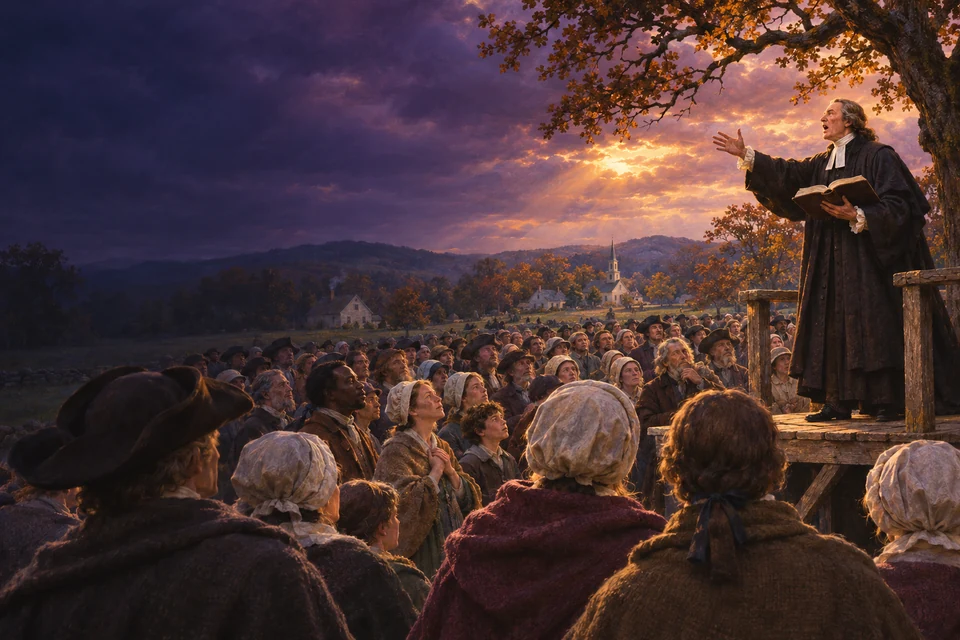
Picture a preacher opening a Bible before a crowd in a field. People can hear his voice, but what happens when they go home? That question belongs as much to the church today as it did to the towns and congregations caught up in the First Great Awakening.
The awakening grew out of local revivals. In 1734–35, Jonathan Edwards recorded a surge of conversions in Northampton, Massachusetts. His account, A Faithful Narrative of the Surprising Work of God, carried the story beyond his congregation and across the Atlantic. Later, George Whitefield’s preaching tours brought an emphasis on conversion before listeners in many of Britain’s American colonies. The Library of Congress situates these events within a wider movement that also reached England, Wales, and Scotland.
Edwards wrote as a pastor observing a congregation over time. Whitefield, an ordained Anglican evangelist, preached in public to people who might never have heard him in a parish church. The movement spread through local congregations, traveling preaching, and printed accounts. Those channels help explain how news traveled. Whether a message produced spiritual change calls for a different kind of attention.
Why did revival preachers emphasize the new birth?
Start where Jesus started with Nicodemus. In John 3:1–8 (KJV), Nicodemus acknowledges Jesus’ miracles. Jesus turns the conversation to the work of the Spirit and the need to be born again. The passage moves from what Nicodemus can observe to a question he must face for himself. Have I received the life Jesus is talking about?
Whitefield preached on that passage’s theme in The Marks of the New Birth, a sermon preserved by the Library of Congress. The subject was personal. A person could have a place in a congregation and still need to hear what Jesus said to Nicodemus. When you read John 3 today, pause before asking what the passage says about somebody else. Ask what it calls you to believe about Christ and what you have been relying on for your standing with God.
Why did some churches disagree about the revival?
The First Great Awakening divided some churches. Supporters in New England were often called New Lights, and opponents were called Old Lights. Among Presbyterians the parties were known as the New Side and Old Side. One New Side minister, Gilbert Tennent, preached a sermon on the dangers of an unconverted ministry that sharply criticized opponents. Those debates reached beyond how loudly someone preached. They raised questions about how to recognize conversion and what churches should expect from their ministers.
It is easy to look back and assume everyone in a crowded field was persuaded, or that everyone who questioned a preacher rejected the message of Christ. The records give us reason to slow down. When you study revival, read more than one kind of source. A published sermon tells you what a preacher urged. A pastor’s narrative tells you what he saw or heard. Neither lets you see into every listener’s heart.
What does Acts 2 say about the power of God?
At Pentecost, people hear Peter preach and ask, “Men and brethren, what shall we do?” (Acts 2:37 KJV). Peter calls them to repent and be baptized in the name of Jesus Christ. Luke then describes people receiving the word and continuing in teaching, fellowship, breaking bread, and prayers. He also records signs and wonders and a community attending to people in need (Acts 2:38–47 KJV).
Read the whole passage before deciding which part you would most like to see repeated. The people who heard Peter had to respond. Those who received the word then had to learn to live together. Prayer and generosity belonged to the same life. If we ask God to move in a gathering, we can also ask Him to show us whom to serve afterward. Acts 2 makes room for both the wonder of what God does and the ordinary obedience He calls for.
How can Christians discern the fruit of revival?
In his 1746 treatise Religious Affections, Edwards made room for deep religious feeling while warning readers against treating emotional intensity as decisive evidence of grace. His concern is worth sitting with. Someone may weep at the end of a sermon or feel quiet conviction that nobody else notices. Give both people time to respond to Scripture and pay attention to what follows.
Paul tells the Thessalonians to remain open to the Spirit and to test what they hear (1 Thessalonians 5:19–22 KJV). In Galatians 5:22–23 (KJV), he describes the Spirit’s fruit in terms that reach the way we treat each other, including love, patience, gentleness, and self-control. When you read reports of a revival, ask what the source actually witnessed, what the writer believed it meant, and what can be learned about the people’s lives afterward. The same questions can help you listen to a testimony with gratitude and discernment.
Put it into practice this week
Read John 3:1–8 and Acts 2:37–47 aloud. Write down one thing Jesus says about new birth and one thing Luke says the believers did after they received the word. Then choose a response you can act on today. You might call someone you need to reconcile with, make time to pray with a friend, or take a meal to a neighbor who has been carrying a burden alone. If you’re studying with a group, ask each person what stood out and leave enough time to pray for one another.
Pray in your own words or start here. Lord Jesus, help me receive Your Word with an honest heart. Show me where I need to repent and give me courage to obey You. Let the Holy Spirit grow love, patience, and generosity in me. Make me attentive to the people You have put around me. Amen.