

Questions & Answers
Believer’s Questions & Answers
Find quick answers about Vince, the ministry, Bible study, books, and the questions explored in our Scripture studies.
Live online every Saturday
Bring your Bible on Saturday
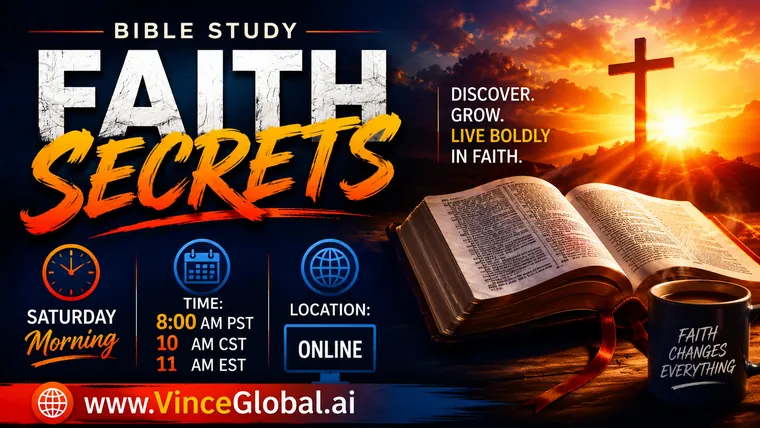
In this interactive online Bible Study, Vince explores the words, miracles, and prophecies of Christ, what He accomplished on the cross, and how it all applies to your life. Come ready to grow in faith and have the eyes of your understanding opened.
Weekly Start Times
- 8 AMPacific
- 10 AMCentral
- 11 AMEastern
Next Online Bible Study Starts In
Your local start time
Get Saturday Bible Study Reminders
We’ll email you Friday at 5 PM and Saturday at 7:45 AM Pacific. Confirm your email to subscribe.
Open the Bible Study reminder signup form
Unsubscribe anytime.
From Vince’s bookshelf
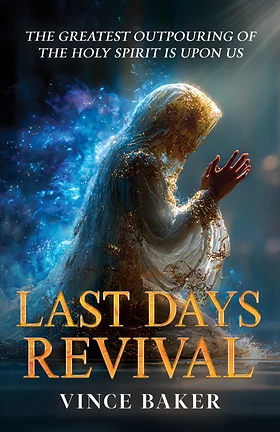
Last Days Revival
Vince Baker presents his Biblical case for a worldwide revival before Christ’s return and explores historical revivals and the Holy Spirit’s work in the Church.
“Last Days Revival by Vince Baker presents a passionate and hope-filled vision of what many believers understand to be the culmination of God’s work on earth before the return…” — Ken 'Dr. Smiley' Rochon Jr., PhD, reader review

Quote of the Day
“The faith of Jesus alone could get the job done, but He still required others to have faith.”
Vince Baker Read this quote →
Vince Baker and the ministry
Who is Vince Baker?
Vince Baker is a Christian minister, Bible teacher, author, recording artist, and speaker. He founded Vince Baker Ministries.
How did Vince Baker get started in ministry?
Vince describes committing his life to Christ at 17. He went on to serve in evangelism, outreach to people experiencing homelessness, Christian education, and local church ministry.
What does Vince Baker teach?
His ministry focuses on Biblical faith, Divine healing, the Holy Spirit, prayer, revival, prophecy, spiritual warfare, and identity in Christ.
Can I invite Vince Baker to a podcast or church?
Yes. See the booking page for ministry, conference, and media topics and an inquiry link.
Does Vince Baker teach AI and YouTube?
Yes. Vince teaches creators, ministries, and businesses how to plan content and use AI and YouTube. His public speaking topics include short-form video and digital strategy.
What is Vince Baker’s approach to studying Scripture?
Vince traces a topic through multiple books of the Bible and compares passages in context. That approach shapes his books and Saturday teaching.
Did Vince Baker serve as a pastor?
Vince’s biography records five years as an assistant pastor in the 1990s, along with earlier evangelism and Christian education.
What is Vince Baker’s YouTube and AI Masterclass?
The training covers audience research, short-form video, writing opening hooks, titles, publishing, and AI-assisted planning.
What does Vince Baker do outside ministry?
His biography lists leadership at Agora Advantage, executive marketing at MomentumTech, and business management for Dr. Eric Zuley with the eZWay Network.
What topics can Vince Baker discuss on a podcast?
Topics include faith, prayer, the Holy Spirit, healing, revival, Christian leadership, media, AI, and YouTube.
What kind of music does Vince Baker release?
Vince Baker Ministries releases Christian music informed by Scripture, with songs on faith, the Gospel, and revival.
Where can I find Vince Baker’s YouTube videos?
Visit the ministry’s YouTube channel for sermons, Shorts, and book videos.
Vince Baker resources
What is Vince Baker Ministries?
Vince Baker Ministries publishes Christian books, Scripture studies, illustrated quotes, and Christian music. Read about founder Vince Baker.
Is Vince Baker an author and a Christian recording artist?
Yes. This site brings together his Christian books and music released under Vince Baker Ministries.
Where can I read Vince Baker quotes with Bible verses?
The Vince Baker Quotes page has 34 illustrated quotes. Each links to a Scripture reflection with Bible passages and a practical step.
Where can I find Vince Baker’s biography and speaking information?
Read the Vince Baker biography for his background in ministry and Christian publishing. Use the speaking page for booking and interviews.
Vince Baker books
Where can I buy Vince Baker’s books?
Browse the Vince Baker book catalog and follow each book’s link to Amazon.
What book formats are available?
Availability varies by title. Use the format selector on Amazon to see the editions currently offered.
Which Vince Baker book should a new reader start with?
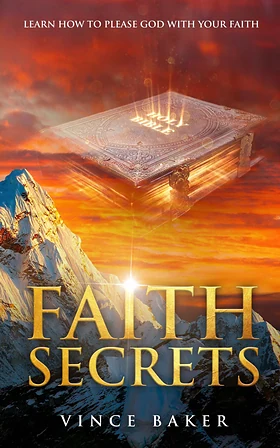
Try Faith Secrets for a foundation in Biblical faith. The Vince Baker reading guide recommends a different first book if you want to study healing prayer, spiritual warfare, or another topic.
Which Vince Baker book teaches about the armor of God?
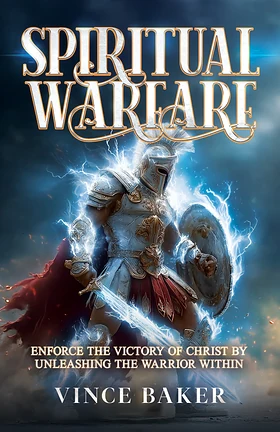
Spiritual Warfare focuses on standing in Christ’s victory. Start with the free Bible study on the armor of God for a passage-by-passage overview.
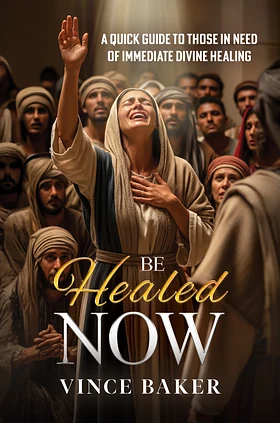
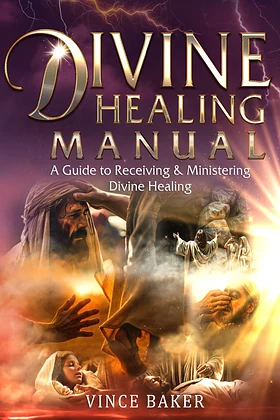
What is the difference between Be Healed Now and Divine Healing Manual?
Be Healed Now is a short introduction for readers seeking Scripture and prayer. Divine Healing Manual is a broader guide to receiving and ministering Divine healing.
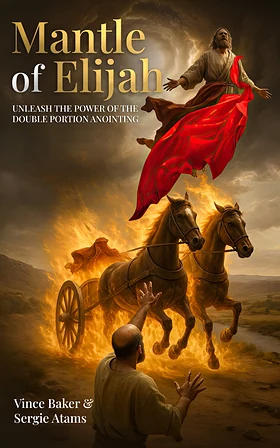
Who wrote Mantle of Elijah with Vince Baker?
Vince Baker co-wrote Mantle of Elijah with Sergie Atams. The book explores Elisha’s calling, spiritual inheritance, and the double portion in 2 Kings 2.
Vince Baker Ministries music
Where can I hear Vince Baker’s music?
The music page has Spotify and Apple Music links for Vince Baker Ministries albums and singles.
What artist name should I search for on Spotify and Apple Music?
Search for Vince Baker Ministries. The music catalog also links directly to the streaming listings for each release.
Which Vince Baker Ministries releases can I start with for faith or revival?
Try Faith Ignitor for faith, The Sound of Revival for revival, or Thrill of the Victory for victory.
Where can I listen to Holy Ghost Swagger and I Love God?
Look for Holy Ghost Swagger and I Love God in the catalog. Each release has its own streaming links.
Does Vince Baker Ministries release both singles and albums?
Yes. Fearless is a single, and Good News is an album. The release catalog labels each one.
Using Christian books, music, and Bible studies
When is the online Bible study?
Vince Baker Ministries teaches live every Saturday at 8:00 AM Pacific, 10:00 AM Central, and 11:00 AM Eastern. In this interactive online Bible Study, Vince explores the words, miracles, and prophecies of Christ, what He accomplished on the cross, and how it all applies to your life. Come ready to grow in faith and have the eyes of your understanding opened. See the Bible study details and join live.
How do I choose a Christian book for a Bible study?
Start with a question or passage, then choose a book that helps you read the passage in context. The reading guide pairs each recommendation with a free study. Compare Acts 17:10–12.
What does the Bible say about using music to remember Scripture?
Colossians connects letting Christ’s Word dwell in us with teaching one another and singing. Try reading a verse before listening, then put the verse’s main thought into your own words. See Colossians 3:16 and Ephesians 5:19–20.
Where can I find free Bible studies on faith, prayer, and spiritual gifts?
The Vince Baker Ministries Bible study library lets you browse and search by topic. Each study starts with a direct answer, then links to the Bible passages it discusses.
Start with these Bible questions
What Is Biblical Faith? Hebrews 11 Explained
Biblical faith is trusting God and acting on what He says before you can see the outcome. Hebrews 11:1 calls faith the substance of things hoped for and the evidence of things not seen. Abraham showed what that means when he obeyed God’s call and left home without knowing where God would lead him. Read the full study →
How Does Faith Come by Hearing? Romans 10:17
Romans 10:17 connects faith with hearing the message of Christ. Paul traces a sequence from someone being sent, to the Gospel being preached, to people hearing and believing. Paul’s point is that the message people hear gives them someone to trust. Jesus’ parable of the sower also shows why how we receive the Word matters. Read the full study →
Why Is Faith Tested in the Bible?
James 1 teaches that tested faith produces endurance, and 1 Peter 1 compares proven faith to gold refined by fire. A trial can reveal what we rely on and give us practice remaining faithful under pressure. James also encourages believers to ask God for wisdom, so the response to a trial includes prayer as well as perseverance. Read the full study →
What Does Faith Like a Mustard Seed Mean?
Jesus uses the mustard seed to show that seemingly small faith can accomplish what appears impossible when it depends on God. Matthew 17 and Luke 17 give the image different immediate settings. In Matthew, the disciples have just failed to help a boy. Jesus redirects their attention from the apparent size of their faith to what God can do. Read the full study →
What Does It Mean to Speak to the Mountain in Mark 11?
In Mark 11:22–25, Jesus uses the image of speaking to a mountain to teach bold faith in God and believing prayer. The same instruction also calls disciples to forgive when they pray. Jesus places trust in God at the start of the teaching and makes forgiveness part of the way His disciples bring their requests to Him. Read the full study →
What Is the Prayer of Faith in James 5?
The prayer of faith in James 5 is prayer offered in trust in the Lord. James specifically tells a sick person to call for the church elders, who pray and anoint the person with oil in the Lord’s name. James places this prayer within the care of the church and also calls believers to pray for one another. Read the full study →
What Does the Persistent Widow Teach About Prayer?
Jesus tells the story of the persistent widow in Luke 18 to teach his disciples to keep praying and avoid losing heart. The widow repeatedly seeks justice, and Jesus contrasts the unjust judge with God. Read the full study →
What Is the Secret Place With God?
The secret place refers to drawing near to God in trusting, personal fellowship. Psalm 91 pictures shelter in the Most High, and Jesus in Matthew 6 teaches prayer directed to the Father in secret. Read the full study →
How Can I Discern God’s Leading Biblically?
Christians discern God’s leading through Scripture, prayer, and wise counsel. John 10 describes Jesus’ sheep hearing and following him, and the New Testament teaches believers to test spiritual claims. Compare what you sense with Scripture and give mature believers room to weigh it with you before you act. Read the full study →
Bible Verses for Healing and Prayer
Four starting passages for healing prayer are Psalm 103:1–5, Matthew 8:14–17, Mark 5:25–34, and James 5:13–16. Together they give language for praise, show Jesus’ compassion, and call the church to pray for the sick. Read each passage in context and let its words guide what you ask God for. Read the full study →
What Does “By His Stripes We Are Healed” Mean?
Isaiah 53 connects healing with the suffering of God’s servant. First Peter 2 applies that imagery to Christ bearing sins and restoring wandering people, while Matthew 8 connects Isaiah’s servant passage to Jesus’ healing ministry. Reading the passages together shows how each writer uses Isaiah’s words in a particular setting. Read the full study →
Why Did Jesus Stop for the Woman in Mark 5?
In Mark 5, Jesus stops after a woman who had suffered for twelve years touches his garment. He listens as she tells the truth, addresses her as daughter, commends her faith, and sends her in peace. Read the full study →
What Is Spiritual Warfare According to the Bible?
Biblical spiritual warfare means standing in God’s strength against spiritual evil through truth, faith, righteousness, Scripture, and prayer. Ephesians 6 locates the struggle beyond flesh and blood. Paul’s picture of armor gives Christians ways to resist deception and temptation while continuing to treat other people with dignity. Read the full study →
What Are the Six Pieces of the Armor of God?
Ephesians 6 names the belt of truth, breastplate of righteousness, readiness from the Gospel of peace, shield of faith, helmet of salvation, and sword of the Spirit, which is God’s Word. Paul then calls believers to continual prayer. Read the full study →
What Are the Shoes of the Gospel of Peace?
The shoes in Ephesians 6:15 picture readiness supplied by the Gospel of peace. Isaiah 52 and Romans 10 connect feet with messengers carrying good news, helping explain the image’s connection to both standing and going. Read the full study →
What Does David and Goliath Teach About Faith?
David and Goliath shows courage grounded in the Lord’s past faithfulness. David remembers earlier deliverance, rejects unfamiliar armor, and acts with skills he already possesses. Read the full study →
What Is the Mantle of Elijah in the Bible?
Elijah’s mantle was a cloak that becomes a visible sign of Elisha’s call and succession. Elijah casts it over Elisha in 1 Kings 19, and Elisha later picks it up in 2 Kings 2. Read the full study →
What Did Elisha Mean by a Double Portion?
Elisha asks for a double portion of Elijah’s spirit in 2 Kings 2:9. A common reading connects the phrase to the firstborn’s inheritance in Deuteronomy 21 and understands the request in light of prophetic succession. Read the full study →
What Are the Gifts of the Holy Spirit?
Spiritual gifts are abilities and expressions of grace the Holy Spirit gives for the good of others. First Corinthians 12 names gifts such as wisdom, faith, healing, prophecy, discernment, tongues, and interpretation. Read the full study →
What Happened on the Day of Pentecost in Acts 2?
At Pentecost, the Holy Spirit filled the gathered disciples, they spoke in other tongues, and visitors heard God’s works in their own languages. Peter proclaimed Jesus and called listeners to repent and be baptized. Read the full study →
What Does It Mean to Be Filled With the Holy Spirit?
Being filled with the Holy Spirit means living under the Spirit’s active influence. Ephesians 5 connects this with worship, thanksgiving, and mutual submission. Acts 4 shows believers filled and speaking God’s word boldly after prayer. Read the full study →
What Is the Fear of the Lord in the Bible?
The fear of the Lord is reverent awe that takes God’s holiness and instruction seriously. Proverbs links it to knowledge and turning away from evil, while Psalm 130 connects it to receiving God’s forgiveness. Read the full study →
How Do You Renew Your Mind According to Romans 12?
Renewing your mind means letting God’s truth reshape how you think, judge, and act. Romans 12 connects renewal with worship and discernment. Ephesians 4 describes putting off former patterns and putting on new ones. Read the full study →
What Is the Blessing of Abraham in Galatians 3?
In Galatians 3, the blessing of Abraham reaches the nations through Jesus Christ. Paul identifies Christ as Abraham’s promised seed and explicitly connects the blessing with receiving the promised Spirit through faith. Read the full study →
What Is the Great Commission in Matthew 28?
The Great Commission is Jesus’ instruction to make disciples of all nations, baptize them, and teach them to observe his commands. Matthew 28 grounds the task in Christ’s authority and closes with his promise to be with his followers. Read the full study →
What Does “Help Thou Mine Unbelief” Mean in Mark 9:24?
In Mark 9:24, a father asks Jesus to help him trust while he is struggling to believe. His prayer shows how faith can begin with an honest appeal to Jesus. The story also exposes the disciples’ need for prayer when their own effort falls short. Read the full study →
What Is the Story of the Bible From Abraham to the Early Church?
The Bible follows God’s promise to bless the nations through Abraham’s family, His dealings with Israel, and the fulfillment of the Gospel in Jesus Christ. After Jesus rose, the Holy Spirit empowered the early church to bear witness and live out that message together. Read the full study →
What Is the Difference Between Revival and Reformation?
Revival describes renewed spiritual life, often expressed in repentance, prayer, and a fresh response to the Gospel. Reformation describes lasting changes in teaching, practice, or institutions. They can overlap when people respond to Scripture and then change the habits that shape their community. Read the full study →
Who Is Vince Baker? His Story, Bible Teaching, Books, and Music
Vince Baker is a Christian Bible teacher, minister, author, and recording artist who founded Vince Baker Ministries. His public work connects Scripture study with everyday faith through books, music, illustrated quotes, and a live Saturday Bible study. Read the full study →
What Did Samson’s Last Prayer Reveal About His Strength?
Samson’s last prayer in Judges 16 shows him asking God for the strength he could no longer summon on his own. His story exposes the danger of presuming on a gift and gives readers a sober picture of dependence on God. Read the full study →
Why Did Elisha Pray “Open His Eyes” in 2 Kings 6?
Elisha prayed for his servant’s eyes to be opened because the servant could see the enemy around Dothan and was afraid. God showed him horses and chariots of fire. The story ends with a second surprise when Elisha tells Israel’s king to feed the captured soldiers. Read the full study →
Why Did King Solomon Ask God for an Understanding Heart?
Solomon asked for an understanding heart so he could judge God’s people and discern good from evil. First Kings 3 shows why the request pleased God. Solomon’s later life shows why receiving wisdom and continuing to act wisely are two different responsibilities. Read the full study →
What Does King David’s Prayer in Psalm 51 Teach About Repentance?
Psalm 51 records David asking God for mercy, cleansing, and a renewed heart. Read alongside Nathan’s confrontation in 2 Samuel 12, the prayer shows repentance as honest confession and a plea for God to change what has gone wrong within. Read the full study →
How Can I Know I Am Born Again?
Jesus describes being born again as a new birth brought about by the Spirit. John connects receiving eternal life with believing in the Son of God. Begin with what Christ has done, trust Him, and let that trust shape the way you live. Read the full study →
How Do Faith and Obedience Work Together?
Faith receives God’s grace and responds to what He says. Ephesians 2 describes salvation as God’s gift and believers as created for good works. James shows why a claim to faith should become visible through care, obedience, and action. Read the full study →
What Does It Mean to Abide in Christ?
To abide in Christ is to remain in fellowship with Him, receiving His words and responding to His love. Jesus uses the picture of a vine and branches to explain our dependence on Him and the fruit that grows from that relationship. Read the full study →
How Can I Pray According to God’s Will?
Praying according to God’s will means bringing requests to Him in trust and allowing His revealed Word to shape them. First John 5 encourages confidence that God hears, while Jesus teaches His disciples to seek the Father’s Kingdom and will. Read the full study →
How Can I Forgive When I Have Been Hurt?
Christian forgiveness begins with the mercy God has shown us in Christ. Ephesians 4 calls believers to put away bitterness and act with kindness. Jesus also connects forgiving others with the way His disciples pray and live together. Read the full study →
What Does the Bible Teach About the Anointing of the Holy Spirit?
The Bible connects anointing with God setting people apart and empowering them for His purposes. Jesus describes His mission in the language of the Spirit’s anointing. Acts points to His ministry of doing good and healing, and First John connects the anointing believers receive with remaining in the truth about Christ. Read the full study →
What Is the Difference Between the Fruit and Gifts of the Spirit?
The fruit of the Spirit describes the character expressed in a life led by the Spirit. Spiritual gifts are ways the Spirit equips believers to serve others. Paul places both within a life of love, and First Corinthians 13 explains why love must shape the exercise of gifts. Read the full study →
How Should Christians Test a Prophetic Word?
Christians should weigh prophetic claims under Scripture, consider what they teach about Jesus, and invite accountable believers to evaluate them. First Thessalonians calls believers to test what they hear and hold on to what is good. First Corinthians describes others weighing a prophetic message in the gathered church. Read the full study →
What Is a Believer’s Authority in the Name of Jesus?
Authority in Jesus’ name rests in who Jesus is and in acting under His lordship. Luke and Acts describe disciples serving through His power, while also directing attention to faith in Him, joy in belonging to God, and a life that honors His name. Read the full study →
What Does It Mean to Take Thoughts Captive?
In Second Corinthians 10, Paul describes confronting arguments and proud claims that oppose the knowledge of God and bringing thought into obedience to Christ. Read the passage in its setting, then consider how Christ’s truth should guide the beliefs and assumptions shaping your choices. Read the full study →
How Can Praise Shape Prayer When Life Is Difficult?
Praise turns our attention toward God while we bring real needs to Him. Acts 16 shows Paul and Silas praying and singing in prison, and Philippians 4 connects prayer with thanksgiving and the peace of God. These passages invite a faithful response in the middle of difficulty. Read the full study →
What Is Our Inheritance in Christ?
The New Testament describes believers as God’s children and heirs through Christ. Ephesians 1 connects inheritance with redemption and the Holy Spirit’s seal. Romans 8 places it within adoption, present perseverance, and the hope of future glory. Read the full study →
How Can I Give Cheerfully and Wisely?
Christian generosity is a willing response to God’s grace and the needs of others. Paul encourages cheerful giving, care for household responsibilities, and readiness to share. Wise generosity considers both the person receiving help and the responsibilities God has already entrusted to the giver. Read the full study →
How Can I Be Faithful With My Spiritual Calling?
Faithfulness in a spiritual calling grows through attention to Christ’s teaching, responsible service, and perseverance. Paul encourages Timothy to stir up the gift entrusted to him and to watch his life and teaching. Jesus also connects faithfulness in small responsibilities with larger trust. Read the full study →
How Do I Become a Doer of the Word?
A doer of the Word hears God’s teaching and puts it into practice. James connects receiving the Word with conduct, speech, and care for people in need. Jesus compares hearing and doing His words to building a house on a firm foundation. Read the full study →
Faith and prayer
What does “help my unbelief” mean?
In Mark 9, a father asks Jesus to help his son and admits that his own trust is incomplete. His prayer gives believers words to bring honest doubt to Jesus while still asking him for help. Mark 9:14-29
How do I pray when God seems silent?
Scripture gives room for lament as well as praise. Psalm 13 begins with a question about God’s apparent absence and moves toward trust. Bring the unanswered request honestly to God and ask others to pray with you as you wait. Psalm 13 · Hebrews 4:14-16
What is the purpose of fasting in the Bible?
Biblical fasting sets aside ordinary comforts to give attention to God in prayer, repentance, or worship. Jesus teaches his followers to fast without putting their devotion on display. In Acts, the church fasts and prays as it commissions Barnabas and Saul. Matthew 6:16-18 · Acts 13:1-3
What does it mean to pray according to God’s will?
First John ties confidence in prayer to asking according to God’s will. Scripture shapes what believers ask for, and Jesus’ prayer in Gethsemane shows that a specific request can be offered honestly while entrusting the outcome to the Father. 1 John 5:14-15 · Luke 22:39-46
Divine healing
What is Divine healing in the Bible?
Divine healing is God restoring people who are sick or afflicted. The Gospels show Jesus healing with compassion, and James calls believers to pray for the sick in the Lord’s name. Matthew 8:14-17 · James 5:14-16
How did Jesus respond to people who asked for healing?
The Gospels show Jesus responding to people who approached him with needs. In Mark 1, he reaches out and touches a man with leprosy. In Mark 10, he stops and asks Bartimaeus what he wants, then restores his sight. Mark 1:40-45 · Mark 10:46-52
Does sickness always mean a person sinned?
In John 9, the disciples ask whether a man’s blindness came from his own sin or his parents’ sin. Jesus rejects both explanations for that man. The passage gives readers reason to avoid assigning personal blame simply because someone is suffering. John 9:1-7
What does anointing with oil mean in James 5?
James tells a sick person to call the church elders, who pray and anoint the person with oil in the Lord’s name. The passage places the practice in the care of the church and directs the elders’ trust toward the Lord. James 5:13-16
How can Christians support someone who is still waiting for healing?
Keep praying, listen, and offer concrete help. Romans urges believers to weep with those who weep, and Galatians calls them to bear one another’s burdens. Patient presence gives someone room to speak honestly about what they are facing. Romans 12:12-15 · Galatians 6:2
Holy Spirit, prophecy, and revival
What is the difference between spiritual gifts and the fruit of the Spirit?
Paul describes spiritual gifts as ways the Spirit equips believers to serve for the common good. The fruit of the Spirit describes the character the Spirit produces in believers, including love, patience, and self-control. Both belong in the life of a healthy church. 1 Corinthians 12:4-11 · Galatians 5:22-23
How can I discover my spiritual gifts?
Start serving in a concrete need and invite mature believers to help you recognize where your service builds others up. Paul describes different gifts within one body, so growth involves both participation and learning from others. Romans 12:3-8 · 1 Corinthians 12:12-27
How does the Bible say to test a prophetic word?
Paul tells the church to weigh what prophets say, and he urges believers to test what they hear and hold on to what is good. Compare the message with Scripture, look for whether it honors Christ, and invite accountable discernment from mature believers. 1 Corinthians 14:29-33 · 1 Thessalonians 5:19-22 · 1 John 4:1-3
What does it mean to quench the Holy Spirit?
In 1 Thessalonians, quenching the Spirit is mentioned alongside despising prophecy. Paul’s response pairs openness with careful testing. The church should take spiritual claims seriously enough to weigh them and retain what is good. 1 Thessalonians 5:19-22
What is Biblical revival?
Biblical renewal involves returning to God with prayer, repentance, and renewed obedience. Psalm 85 asks God to revive his people, and Acts describes early believers devoting themselves to teaching, fellowship, prayer, and generosity after Pentecost. Psalm 85:4-7 · Acts 2:37-47
Elijah and Elisha
What is a mantle in the Bible?
A mantle is a cloak or outer garment. Elijah’s mantle becomes a visible sign of Elisha’s calling and succession when Elijah casts it over him and Elisha later takes it up. 1 Kings 19:19-21 · 2 Kings 2:13-15
Why did Elisha ask for a double portion of Elijah’s spirit?
Elisha asked for the inheritance of a spiritual heir as he prepared to carry on Elijah’s prophetic work. The phrase echoes the firstborn’s double share in Deuteronomy. Elijah ties the request to whether Elisha witnesses his departure. 2 Kings 2:9-15 · Deuteronomy 21:15-17
Did Elijah go to heaven in a chariot of fire?
Second Kings says Elijah went up in a whirlwind. A chariot and horses of fire appeared and separated Elijah from Elisha before Elijah was taken up. 2 Kings 2:9-12
Spiritual warfare
What is spiritual warfare according to the Bible?
Spiritual warfare is the Christian struggle against unseen spiritual opposition, including temptation and deception. Paul calls believers to draw strength from the Lord, stand firm in the whole armor of God, and keep praying. Ephesians 6:10-18
How do I fight spiritual warfare as a Christian?
Christians fight spiritual warfare by submitting to God, resisting the devil, and putting on the armor of God. Bring specific pressures to God in prayer, test claims against Scripture in context, and ask trusted Christians to pray with you. James 4:7-8 · Ephesians 6:10-18
How do Christians resist the devil?
James pairs resistance with submission to God. Peter describes resistance as standing firm in faith while staying alert. In practice, believers can recognize temptation, refuse to give it their allegiance, and respond with prayer and obedience. James 4:7-10 · 1 Peter 5:8-10
How do I put on the armor of God in everyday life?
Paul’s imagery points to actions such as telling the truth, choosing what is right, carrying the message of peace, trusting God, and praying. Read Ephesians 6 as a call to stand firm together in those practices. Ephesians 6:10-18
What does it mean to take every thought captive?
Paul uses this image when describing a ministry that confronts arguments raised against the knowledge of God. It also gives believers a way to examine ideas and assumptions in the light of Christ’s teaching. 2 Corinthians 10:3-5
Is every hardship a spiritual attack?
Scripture describes hardship from several sources, including temptation, other people’s choices, and the ordinary troubles of life. Pray for discernment and consider the circumstances before drawing conclusions about a specific struggle. James 1:2-15 · Ephesians 6:10-13 · John 16:33
Discipleship and stewardship
What does it mean to be a new creation in Christ?
Paul describes a changed relationship with God through Christ. That new identity has practical consequences: believers learn to see people differently and participate in the work of reconciliation. 2 Corinthians 5:14-21
What is Biblical stewardship?
Stewardship means using what God has entrusted to you responsibly and for others’ good. Peter applies it to spiritual gifts, and Paul connects material generosity with meeting needs and producing thanksgiving to God. 1 Peter 4:10-11 · 2 Corinthians 9:6-12
What does the Bible say about giving cheerfully?
Paul tells each person to give from a deliberate decision of the heart, free from pressure. The chapter connects such generosity to supplying others’ needs and giving thanks to God. 2 Corinthians 9:6-12
Armor of God check-up
How do I put on the belt of truth in daily life?
Practice honesty and test the stories you tell yourself against Scripture. Start by correcting one false assumption or half-truth today. Ephesians 6:14
What should I do when fear makes a thought feel true?
Name the thought, check its evidence, and ask what a faithful response would look like. Feeling afraid can coexist with choosing to trust God. Psalm 56:3-4
How can I answer temptation with Scripture?
Read the passage in context and use it to guide the next choice. Jesus answered temptation with Scripture while remaining faithful to the Father. Matthew 4:1-11
What is a Biblical way to examine a recurring stronghold?
In 2 Corinthians 10, Paul brings arguments under Christ’s authority. Notice the belief behind a repeated reaction and test whether it agrees with Christ’s teaching. 2 Corinthians 10:3-5
How can Scripture help me renew my mind?
Read a passage carefully and put one thing it teaches into practice. Romans 12 connects a renewed mind with offering your life to God. Romans 12:1-2
What does the breastplate of righteousness look like in practice?
Choose integrity where it would be easier to hide or retaliate. Paul puts righteousness among the ways believers stand firm in the Lord. Ephesians 6:14
How can I wear the shoes of the Gospel of peace during conflict?
Prepare a truthful, gentle response and look for what you can do to pursue peace. You can maintain a necessary boundary while refusing retaliation. Romans 12:17-21
What does it mean that we wrestle not against flesh and blood?
Paul distinguishes spiritual opposition from the people around us. Pray for those involved and address wrongs without treating people as enemies to defeat. Ephesians 6:12
What does it mean to take up the shield of faith when I doubt?
Turn toward God with the doubt you actually have. Name one truth about Him you can act on today, even while questions remain. Mark 9:23-24
How does the helmet of salvation help when I feel condemned?
Begin with the assurance of belonging to Christ and consider what needs to be confessed or repaired. Romans 8 places assurance alongside life in the Spirit. Romans 8:1-4
What role does prayer play in putting on the armor of God?
Paul closes the armor passage by calling for persistent prayer for others. Choose one person and one specific need to bring before God. Ephesians 6:18
How can I stand firm when I feel spiritually worn down?
Ask for the Lord’s strength and let another believer know where you need support. Start with one manageable act of obedience and prayer. Ephesians 6:10-13
How can I put on the whole armor of God each morning?
Read Ephesians 6:10–18 and pray through one piece at a time. End by naming a real situation where you can practice truth, faith, peace, or prayer. Ephesians 6:10-18
Prophetic discernment assessment
How can I tell if a prophetic word agrees with Scripture?
Write down what was actually said and compare it with the Bible in context. Give Scripture authority over the message. Acts 17:10-12
What does it mean to test the spirits in 1 John 4?
John calls believers to examine spiritual claims and their confession concerning Jesus Christ. Ask what a message says about who Jesus is and what authority it gives Him. 1 John 4:1-3
Can an impression override a clear instruction in the Bible?
Give the Biblical instruction priority. A strong impression is a reason to examine it carefully and seek counsel before acting. 2 Timothy 3:16-17
How do I separate what someone said from my interpretation?
Record the wording first, then put your interpretation in a separate sentence. This makes it easier for others to weigh the actual claim with you. 1 Corinthians 14:29
Who should help me weigh a prophetic word?
Ask mature believers who know Scripture and can disagree honestly. Paul describes weighing prophecy as a shared responsibility in the church. 1 Corinthians 14:29-33
What if someone says I must act immediately on a prophecy?
Pause when a message uses urgency to discourage questions. Seek wise counsel before making a major commitment, especially one that affects your money, health, or family. Proverbs 19:2
What should I do if a specific prediction does not come to pass?
Check what was actually predicted and whether conditions were stated. A failed prediction warrants honest review and accountability before trusting further claims. Deuteronomy 18:20-22
How do I stay open to prophecy while taking discernment seriously?
Paul pairs openness with testing. Listen carefully, examine the claim with others, and retain what holds up under scrutiny. 1 Thessalonians 5:19-22
What fruit should I look for in prophetic ministry?
Look for humility, integrity, patience, and love over time. Jesus tells His hearers to recognize false prophets by their fruits. Matthew 7:15-20
Can a prophetic message correct someone and still build them up?
Correction can serve another person’s good when it is truthful, accountable, and offered with care. Paul places prophetic speech in the service of strengthening the church. 1 Corinthians 14:3
What are warning signs of manipulative prophetic ministry?
Watch for demands for secrecy, threats, money pressure, or attempts to isolate you from trusted people. Healthy ministry leaves room for questions and accountability. 1 Peter 5:2-3
What should I do before sharing a word I believe is for someone else?
Ask whether sharing would help them, and offer it humbly in a setting where it can be weighed. Give the other person freedom to decline or take time. 1 Corinthians 13:4-7
Church history and the Bible
What is the difference between revival and reformation?
Revival emphasizes renewed spiritual life. Reformation changes teachings or practices in the life of the church. Read the comparison.
What did Elisha mean by a double portion?
The phrase echoes the firstborn’s inheritance share and points to Elisha’s request to succeed Elijah. Read the Biblical guide.
Did Nicaea decide what belongs in the Bible?
The surviving council decisions do not set a list of books. The bishops addressed their confession of Christ, church order, and Easter. Read the church history article.
More questions
How can I support Vince Baker Ministries?
Give securely through Vince Baker Ministries. Thank you for your support. You can also share a Bible study or invite a friend to the Saturday session.