Published by Vince Baker Ministries ·
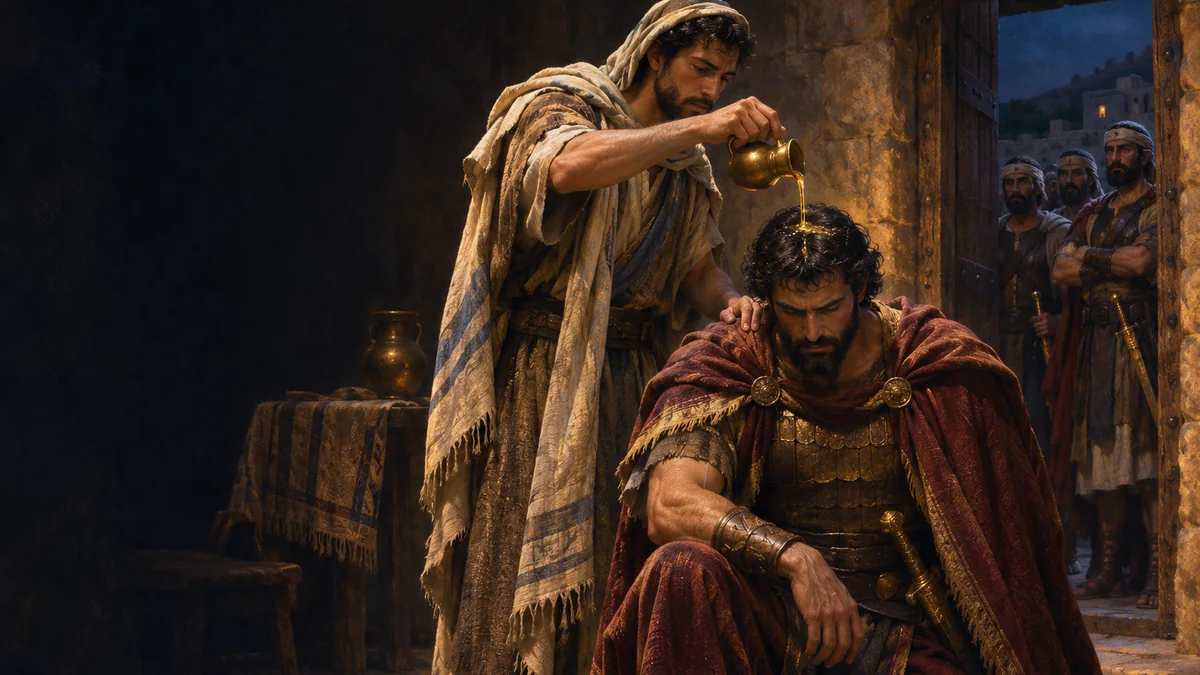
“And he arose, and went into the house; and he poured the oil on his head, and said unto him, Thus saith the LORD God of Israel, I have anointed thee king over the people of the LORD, even over Israel.”
2 Kings 9:6 · KJV
Why did the messenger act in private?
Elisha instructed him to take Jehu into an inner room, pour oil on his head, announce the Lord’s word, and leave quickly. Jehu was with other officers at the time. When they learned what had happened, they spread garments beneath him, blew a trumpet, and proclaimed him king.
What does Scripture say about Jehu’s later faithfulness?
Second Kings credits him with acting against Ahab’s house and removing Baal worship, and then records that he continued in Jeroboam’s sins and did not follow the law of the Lord with his whole heart. Hosea later speaks of judgment concerning the bloodshed of Jezreel. The texts give readers a complex record that resists turning a royal anointing into blanket approval.
Ask what obedience looks like after a calling
Read 2 Kings 10:28–31 and name one area that can escape scrutiny when someone is successful in public. Bring your answer into prayer and an honest conversation with a mature believer.
Read the Scripture passages
- 2 Kings 9:6 · KJV
- 1 Kings 19:15-17 · KJV
- 2 Kings 9:1-13 · KJV
- 2 Kings 10:28-31 · KJV
- Hosea 1:4 · KJV