Place it in church history
- Era
- Charismatic Renewal and Church Cooperation
- Key dates
- 1948 through the late twentieth century
- Location
- North America and international church networks
Find Charismatic Renewal and Church Cooperation on the interactive timeline.
Published by Vince Baker Ministries ·
How did renewal cross denominational boundaries?
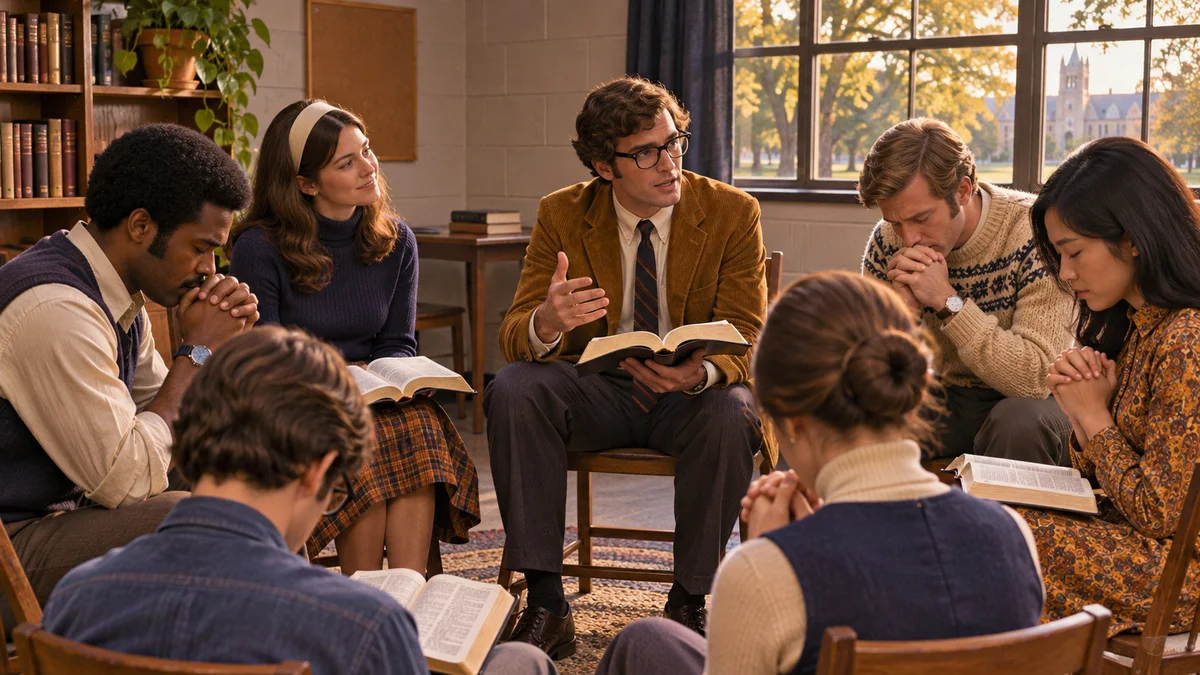
Pentecostal churches had already made Spirit baptism and spiritual gifts central to their teaching. In the 1960s, renewed interest in those experiences also spread among Christians who remained in established Protestant and Catholic churches. Dennis Bennett’s public testimony in an Episcopal setting in 1960 is often cited as a landmark. In 1967, prayer among Catholic participants at the Duquesne weekend helped catalyze Catholic charismatic renewal.
Who helped the movement spread?
Congregations, university groups, and lay leaders carried renewal into ordinary meetings and homes. David du Plessis cultivated dialogue across Pentecostal and other Christian traditions. Patti Gallagher Mansfield was among the participants at Duquesne and became a public witness to its influence. In healing ministry, Kathryn Kuhlman’s services brought together people with different church backgrounds.
What else was changing?
The World Council of Churches formed in 1948 as a forum for cooperation among churches. The Second Vatican Council, held from 1962 to 1965, addressed Catholic worship, the life of the Church, and relations with other Christians. At Lausanne in 1974, evangelical leaders articulated a shared commitment to world evangelization. These initiatives had distinct aims, constituencies, and convictions. Together they show the range of ways Christians were responding to a changing world.
What did costly witness look like in the twentieth century?
Dietrich Bonhoeffer opposed Nazi interference in church life, helped train pastors in the Confessing Church, and was executed in 1945 for his role in the resistance. In El Salvador, Archbishop Óscar Romero spoke against violence and defended people suffering repression. He was killed while celebrating Mass in 1980. Their lives show how testimony could demand courage outside a preaching platform.
How did testimony reach a wider public?
Corrie ten Boom survived imprisonment after her family helped shelter Jewish people during the Nazi occupation of the Netherlands. Her later testimony emphasized faith and forgiveness. Billy Graham’s 1949 Los Angeles campaign brought him national attention, and later campaigns, broadcasts, and cooperation with local churches extended his preaching. In India, Mother Teresa founded the Missionaries of Charity in 1950 and made care for people facing poverty and serious illness central to her vocation. These ministries illustrate different ways Christian conviction entered public life.
How can spiritual gifts serve the local church?
First Corinthians 12 describes one body with many gifts. First Corinthians 14 asks worshipers to build one another up in an orderly gathering. Read those chapters together and consider how a congregation can make room for prayer and testimony while also practicing discernment and accountability.
Scripture to read alongside the history
- 1 Corinthians 12:4-27 · KJV
- 1 Corinthians 14:26-33 · KJV
- Ephesians 4:1-6 · KJV
Historical sources
- World Council of Churches, institutional history
- Vatican archive, documents of the Second Vatican Council
- CHARIS, Catholic charismatic renewal service
- The Lausanne Covenant, 1974
- United States Holocaust Memorial Museum, Dietrich Bonhoeffer
- Billy Graham Evangelistic Association, biography
- Ten Boom Museum, family history
- Nobel Prize, Mother Teresa biography