
Church history, reformations, and revivals
Church History Timeline: From Jesus and the Apostles to Today
Follow the Gospel from Jesus Christ and the apostles to the worldwide Church today. Explore the courage of early martyrs, the councils that shaped Christian belief, medieval missions, the Reformations and Bible translation, the Great Awakenings, the Pentecostal movement, Divine healing revivals, and the men and women who carried the Gospel through each era.
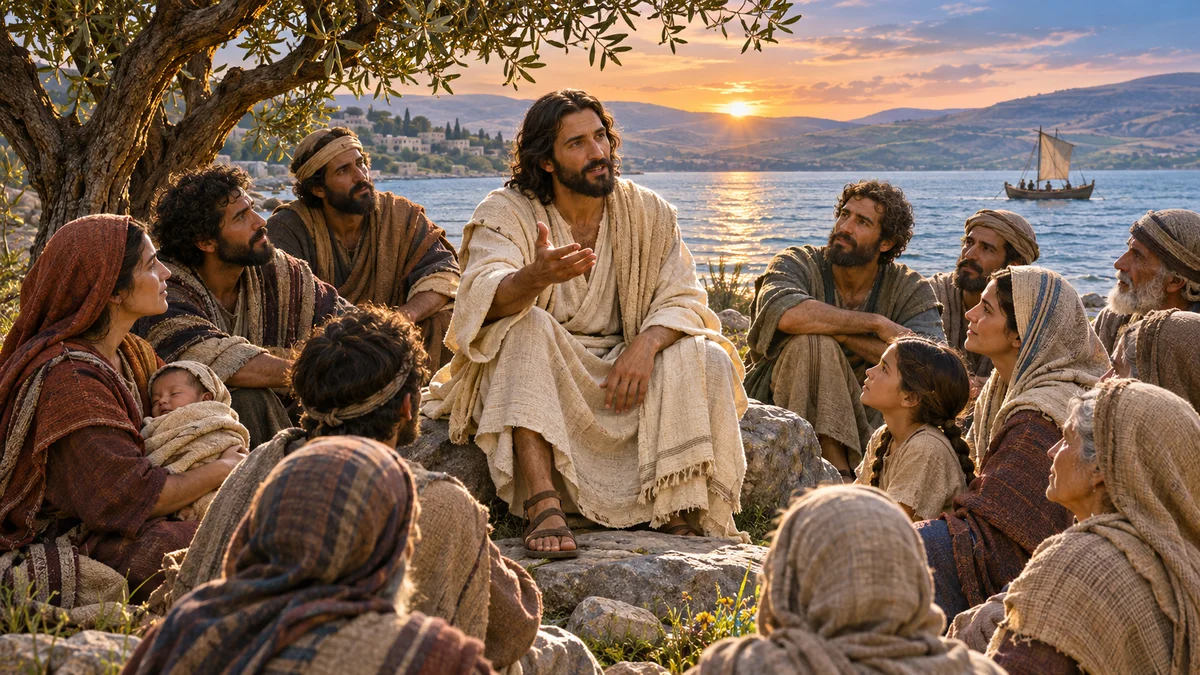
First century AD
Jesus and the Apostles
Christianity began with Jesus of Nazareth in first-century Galilee and Judea. His disciples proclaimed His death and resurrection, received the Holy Spirit at Pentecost, and carried the Gospel from Jerusalem into the Roman world.
Read the illustrated era guide
c. AD 27–30Jesus proclaims the kingdom
Galilee and Judea
Jesus teaches, heals, calls disciples, and announces the kingdom of God. The dates of His public ministry are approximate.
Read the era guidec. AD 30 or 33Crucifixion and resurrection of Jesus
Jerusalem
The earliest Christian witness centers on Jesus’ death and resurrection. Mary Magdalene is among the first witnesses named in the Gospels.
Read the era guideFirst century ADPeter preaches at Pentecost
Jerusalem
Acts 2 records the coming of the Holy Spirit, Peter’s public witness, baptisms, and a community devoted to teaching and prayer.
Read the era guideFirst century ADStephen gives his life as a witness
Jerusalem
Acts 7 records Stephen’s testimony before his death by stoning. Acts 8 describes the persecution that scattered believers carrying the Gospel.
Read the era guideFirst century ADPhilip and the Ethiopian official
Road from Jerusalem toward Gaza
Philip explains Isaiah and baptizes the Ethiopian official, an early example of the Gospel crossing cultural boundaries.
Read the era guidec. AD 49The Jerusalem Council welcomes Gentiles
Jerusalem
The leaders in Acts 15 address whether Gentiles must be circumcised to follow Christ.
Read the era guidec. AD 50sLydia, Priscilla, and Phoebe serve the growing Church
Philippi, Ephesus, and Cenchreae
Lydia opens her home, Priscilla and Aquila teach Apollos, and Paul commends Phoebe to the believers in Rome.
Read the era guidec. AD 60sPaul witnesses in Rome
Rome
Paul preaches under house arrest. His letters and missionary journeys helped congregations share teaching across cities.
Read the era guide
Second through fifth centuries
Early Church and Patristic Era
From the second through fifth centuries, Christians endured periods of persecution, developed churches across several regions, and debated how to confess the identity of Jesus. Martyrs and teachers left a record of costly witness and careful theological work.
Read the illustrated era guide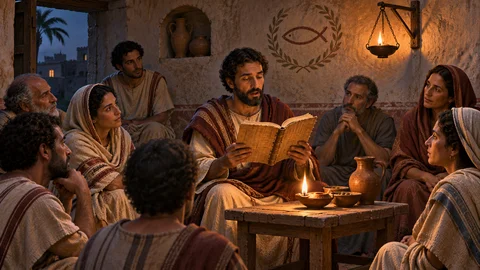
Early second centuryIgnatius writes to churches on his way to martyrdom
Roman Empire
His letters encourage Christian communities and preserve early testimony about church life and allegiance to Christ.
Read the era guideMid-second centuryPolycarp refuses to renounce Christ
Smyrna, Roman Asia
His church’s account of his death was shared as an example of faithful endurance.
Read the profile or studyAD 177Blandina and other Christians are martyred
Lyon and Vienne, Roman Gaul
An early church letter preserved by Eusebius recounts Blandina’s endurance under persecution.
Read the era guidec. AD 180Irenaeus writes Against Heresies
Lyon, Roman Gaul
Irenaeus defends the continuity of Christian teaching with the apostolic witness.
Read the era guideAD 203Perpetua and Felicity are martyred
Carthage, Roman North Africa
Their account records the courage of two women who held to their Christian confession under Roman persecution.
Read the era guideAD 313Constantine and Licinius agree on toleration
Roman Empire
Christians gain greater freedom of worship and a path to recover confiscated property.
Read the era guideAD 325First Council of Nicaea
Nicaea, Bithynia
Bishops adopt a creed confessing the Son’s Divine being. The council’s surviving decisions do not choose the Bible’s books.
Read the profile or studyFourth centuryChristianity takes root in Aksum
Present-day Ethiopia and Eritrea
The kingdom becomes an early center of African Christianity, associated with King Ezana and Frumentius.
Read the era guideAD 386–387Augustine converts and is baptized
Milan
His Confessions recounts his conversion and the influence of his mother Monica’s prayers.
Read the era guideFifth centuryPatrick ministers in Ireland
Ireland
Patrick’s Confession describes his calling and ministry. His own testimony is a better starting point than later legends.
Read the era guideAD 381Council of Constantinople
Constantinople
The council reaffirms the Nicene faith. The creed associated with Nicaea and Constantinople becomes widely used in Christian worship.
Read the era guideAD 431Council of Ephesus
Ephesus
The council addresses a dispute about the identity of Christ and the title Theotokos for Mary. Its reception becomes part of the history of Eastern Christian divisions.
Read the era guideAD 451Council of Chalcedon
Chalcedon, near Constantinople
The council confesses one Christ in two natures. Different receptions of its definition shape later church traditions.
Read the era guide
Sixth through fifteenth centuries
Medieval Christianity
Medieval Christianity stretched across Europe, Africa, and Asia. Monastic communities preserved learning and prayer, missionaries translated Christian texts, and divisions and wars reshaped relationships between churches and neighbors.
Read the illustrated era guide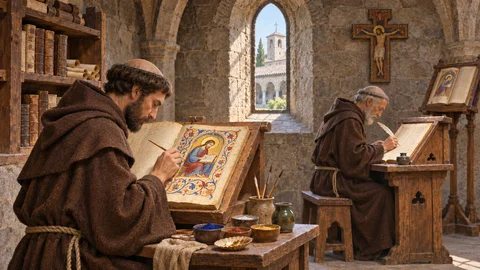
Sixth centuryBenedict’s Rule shapes Western monastic life
Italy
A shared rhythm of prayer, work, and community becomes influential in Western monasteries.
Read the era guideAD 597Augustine of Canterbury arrives in Kent
England
His mission becomes an important stage in the growth of Christianity among the Anglo-Saxons.
Read the era guideAD 781The Xi’an stele records Christianity in Tang China
Xi’an, China
The monument records a Christian mission that reached China through the Church of the East.
Read the era guide860sCyril and Methodius translate Christian texts
Great Moravia
Their work makes teaching and worship accessible in a Slavic language.
Read the era guideAD 988The baptism of Vladimir marks a turning point
Kyivan Rus’
The conversion associated with Vladimir shapes the development of Eastern Christianity in the region.
Read the era guideAD 1054East–West Schism
Rome and Constantinople
Excommunications mark an important stage in a long separation involving authority, worship, and politics.
Read the era guide1095 onwardThe Crusades reshape relations across regions
Europe and the eastern Mediterranean
Armed campaigns conducted in the name of religion reshape Christian relations with Muslim and Jewish communities and between Eastern and Western Christians.
Read the era guideTwelfth centuryHildegard of Bingen teaches through writing and song
Rhineland
The abbess writes, composes music, and corresponds with leaders beyond her community.
Read the era guideAD 1204Crusaders sack Constantinople
Constantinople
The Fourth Crusade’s attack on the city deepens the division between Eastern and Western churches.
Read the era guideEarly thirteenth centuryFrancis and Clare of Assisi form communities
Assisi, Italy
Their communities model prayer, simplicity, and service, inspiring lasting religious orders.
Read the era guideLate fourteenth centuryCatherine of Siena presses for reform
Italy and Avignon
Through letters and personal counsel, she urges reform and intervenes in disputes over church leadership.
Read the era guide
Late 1300s through the 1600s
Pre-Reformation and Reformation
Late medieval reformers questioned church practices. In the sixteenth century, Protestant movements and Catholic reform reshaped worship, education, authority, and access to Scripture across Europe and beyond.
Read the illustrated era guide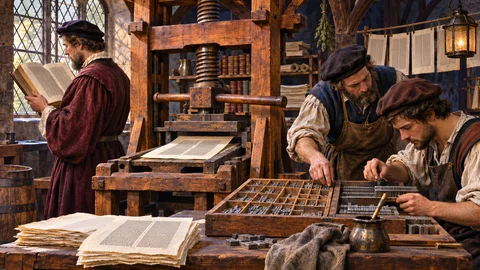
Late 1300sJohn Wycliffe and English Scripture
England
Wycliffe’s circle is associated with English Bible translation and criticism of church authority.
Read the profile or studyAD 1415Jan Hus is executed at Constance
Constance
Hus’s preaching and death make him a central figure in Bohemian reform.
Read the profile or studyAD 1517Martin Luther challenges indulgence preaching
Wittenberg
Luther’s Ninety-Five Theses open a public controversy over repentance and church practice.
Read the profile or study1520sArgula von Grumbach enters the debate in print
Bavaria
Her published letters show how laywomen took part in public theological debate.
Read the era guideAD 1526William Tyndale’s English New Testament appears in print
Continental Europe and England
His translation reaches readers in English and influences later versions. He is executed in 1536.
Read the profile or study1530s onwardHeinrich Bullinger shapes Reformed teaching
Zürich
Bullinger’s preaching, correspondence, and confessional writing strengthen ties among Reformed churches.
Read the profile or studyAD 1536John Calvin publishes the first Institutes
Basel and later Geneva
Calvin’s work gives Reformed readers a systematic account of doctrine and discipleship.
Read the profile or study1545–1563Council of Trent
Trent
Catholic leaders clarify doctrine and pursue reform in clergy training, discipline, and worship.
Read the era guideAD 1560John Knox and the Scottish Reformation
Scotland
Knox’s preaching and the Scots Confession help shape the reorganization of Scottish church life.
Read the profile or study1560s onwardTeresa of Ávila renews Carmelite life
Spain
Teresa establishes communities focused on prayer and writes influential accounts of spiritual formation.
Read the era guideAD 1611The King James Bible is published
England
The translation draws on earlier English work and becomes influential in preaching, worship, and literature.
Read the era guide
Eighteenth and nineteenth centuries
The Great Awakenings and Holiness
The Great Awakenings were waves of evangelical renewal, with public preaching and a strong emphasis on conversion. The Methodist and Holiness movements also shaped habits of discipleship and prepared part of the setting in which Pentecostalism emerged.
Read the illustrated era guide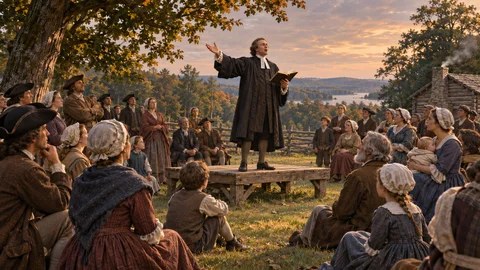
1730s–1740sFirst Great Awakening
British North America
Local and traveling preachers emphasize conversion, and congregations debate the meaning of the renewal.
Read the profile or studyAD 1734–1735Jonathan Edwards documents Northampton renewal
Massachusetts
Edwards records accounts of conversion and later asks readers to weigh spiritual experiences by their fruit.
Read the profile or study1730s onwardGeorge Whitefield preaches outdoors
Britain and North America
Whitefield’s travel and open-air preaching reach audiences beyond one parish.
Read the profile or studyEighteenth centurySusanna, John, and Charles Wesley shape Methodism
England
Susanna teaches her household, John organizes societies, and Charles helps carry Christian teaching through hymns.
Read the era guideAD 1801Cane Ridge camp meeting
Kentucky
A large gathering brings preaching and prayer across congregational boundaries in the Second Great Awakening.
Read the era guide1820s–1830sCharles Finney organizes revival campaigns
United States
Finney becomes known for planned campaigns, preaching, and public invitations to respond.
Read the profile or studyMid-nineteenth centuryPhoebe Palmer teaches consecration
United States and Britain
Through writing and public meetings Palmer spreads Holiness teaching and encourages women’s participation.
Read the era guide
Sixteenth through twentieth centuries
Global Missions and Local Revivals
Christianity spread through migration, trade, translation, mission, and local leadership. The stories of Asian and African churches show how communities took responsibility for the Gospel in their own languages and settings.
Read the illustrated era guide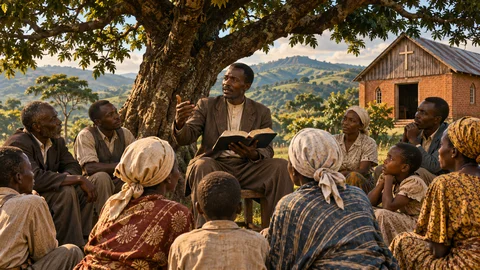
AD 1549Francis Xavier reaches Japan
Japan
The Jesuit mission contributes to communities later sustained by Japanese believers through persecution.
Read the era guide1580s onwardMatteo Ricci learns the language and customs of China
Ming China
Ricci forms relationships through scholarship and presents Christian teaching in a Chinese intellectual setting.
Read the era guideAD 1597Twenty-six Christians are executed at Nagasaki
Nagasaki, Japan
Japanese Christians and foreign missionaries die together during persecution. Their witness is remembered across church traditions.
Read the era guideAD 1864Samuel Ajayi Crowther becomes an Anglican bishop
West Africa
Crowther helps advance translation and models African leadership within the Anglican mission.
Read the era guideLate nineteenth centuryPandita Ramabai builds communities of care and learning
India
Her educational and relief work serves vulnerable women and girls. Christian prayer and community become part of the work at Mukti.
Read the era guideAD 1910World Missionary Conference at Edinburgh
Scotland
Delegates discuss mission and cooperation, with limited representation from many churches in the mission regions.
Read the era guideAD 1933East African Revival and the Gahini convention
Rwanda and Uganda
Local fellowships carry practices of repentance, restitution, testimony, and walking in the light.
Read the profile or study
1901 through the mid-twentieth century
Pentecostal Movement
Modern Pentecostalism took shape through several renewal networks. The 1901 Topeka meetings and the Azusa Street Revival led by William J. Seymour in 1906 became influential, while local leaders helped Pentecostal churches take root around the world.
Read the illustrated era guide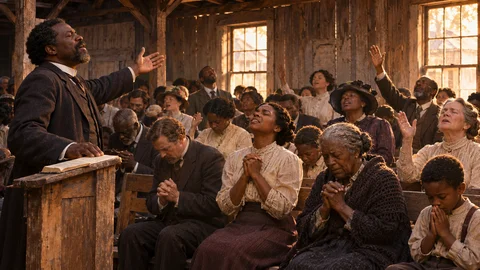
Late nineteenth centuryMaria Woodworth-Etter preaches before Azusa
United States
Her public campaigns show how women evangelists and healing prayer shaped networks before modern Pentecostalism.
Read the profile or studyAD 1901Agnes Ozman speaks in tongues at Topeka
Topeka, Kansas
The prayer meeting at Charles Parham’s school influences early Pentecostal teaching about Spirit baptism.
Read the era guideAD 1906–1909William J. Seymour leads the Azusa Street Revival
Los Angeles
Interracial prayer meetings, visitors, and The Apostolic Faith newspaper spread reports of renewal and spiritual gifts.
Read the era guideEarly twentieth centuryLucy Farrow helps carry Pentecostal prayer and witness
United States and Liberia
Farrow participates in early Pentecostal networks, ministers in prayer, and later travels to Liberia.
Read the era guideAD 1914The Assemblies of God organizes
Hot Springs, Arkansas
Ministers form a cooperative fellowship for missions, training, and doctrinal coordination.
Read the era guideEarly twentieth centurySmith Wigglesworth teaches faith and healing
Britain and international meetings
His traveling ministry and published sermons help spread Pentecostal teaching about prayer and faith.
Read the profile or studyAD 1923Aimee Semple McPherson opens Angelus Temple
Los Angeles
McPherson combines preaching, community service, and later radio broadcasting in a growing Pentecostal ministry.
Read the profile or study
Late 1940s through the 1970s
Divine Healing Revivals
The postwar healing revivals brought large crowds to prayer meetings led by evangelists such as Oral Roberts, Jack Coe, A. A. Allen, William Branham, and Kathryn Kuhlman. Tents, periodicals, radio, and television extended the reach of the campaigns.
Read the illustrated era guide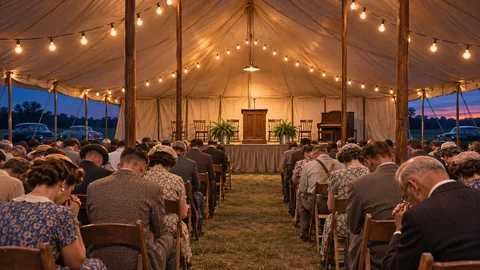
Late 1940sWilliam Branham’s healing campaigns draw crowds
United States and international campaigns
His campaigns become influential in healing revival networks. Later doctrinal claims associated with him remain disputed.
Read the profile or studyLate 1940s onwardOral Roberts builds a traveling healing ministry
United States
Roberts brings prayer meetings from tents to broadcasting and later establishes a university.
Read the profile or study1950sJack Coe holds large tent campaigns
United States
Coe’s tent meetings and Herald of Healing show how portable gatherings and print worked together.
Read the profile or study1950s–1960sA. A. Allen develops Miracle Valley
Arizona
Allen’s ministry uses a permanent base, print, and recordings to extend its campaigns.
Read the profile or study1950s–1970sKathryn Kuhlman leads miracle services
United States
Kuhlman emphasizes the Holy Spirit and draws people from varied church traditions to services and broadcasts.
Read the profile or studyAD 1974Kenneth E. Hagin establishes Rhema Bible Training Center
Oklahoma
Hagin’s teaching and training extend the reach of faith and healing ministry in a later generation.
Read the profile or study
Mid to late twentieth century
Charismatic Renewal and Church Cooperation
In the mid- and late twentieth century, charismatic renewal brought a renewed emphasis on spiritual gifts into established Protestant and Catholic churches. Other movements in the same decades pursued Christian cooperation, mission, and worship reform.
Read the illustrated era guide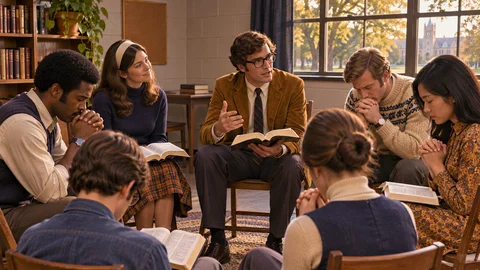
AD 1945Dietrich Bonhoeffer is executed under Nazi rule
Flossenbürg, Germany
The Lutheran pastor opposed Nazi control of church life and was executed for his role in the resistance.
Read the era guide1940s onwardCorrie ten Boom bears witness after imprisonment
The Netherlands and international audiences
After her family sheltered Jewish people during the Nazi occupation, Corrie survived imprisonment and later spoke about Christian faith and forgiveness.
Read the era guideAD 1948The World Council of Churches forms
Amsterdam
Member churches create a forum for cooperation and dialogue across traditions.
Read the era guideAD 1949 onwardBilly Graham’s evangelistic campaigns reach wider audiences
Los Angeles and international campaigns
The 1949 Los Angeles campaign brings national attention to Graham. Crusades, broadcasting, and cooperation with local churches extend his Gospel preaching.
Read the era guideAD 1950Mother Teresa founds the Missionaries of Charity
Calcutta, India
The religious congregation makes care for people facing poverty and serious illness a central expression of its Christian vocation.
Read the era guideAD 1962–1965Second Vatican Council
Vatican City
Catholic bishops address worship, the nature of the Church, relations with other Christians, and engagement with the modern world.
Read the era guideAD 1967The Duquesne weekend
Pennsylvania
A Catholic student retreat becomes a landmark in charismatic renewal. Patti Gallagher Mansfield later tells the story publicly.
Read the era guideAD 1974Lausanne Congress on World Evangelization
Switzerland
Evangelical leaders adopt the Lausanne Covenant and call for cooperation in mission.
Read the era guideAD 1980Óscar Romero is killed while celebrating Mass
San Salvador
The archbishop spoke publicly against violence and on behalf of people suffering repression.
Read the era guide
2000 through November 2026
The Global Church Today
The Church today spans Catholic, Orthodox, Protestant, Pentecostal, and independent traditions across the world. Christianity’s regional distribution has changed significantly, and recent gatherings show how churches continue to address mission, unity, and discipleship.
Read the illustrated era guide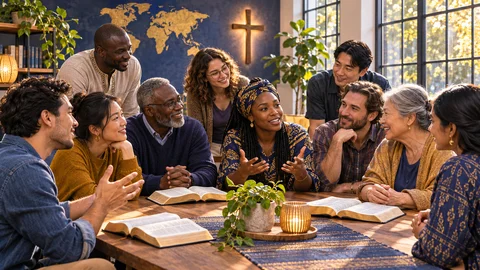
Twenty-first centuryMigration and local leadership shape congregations
Worldwide
Diaspora and local churches carry worship, translation, pastoral care, and witness into new settings.
Read the era guide2010–2020Christian population shifts across regions
Worldwide
Pew’s 2025 report estimates 2.3 billion Christians in 2020 and finds that sub-Saharan Africa had become the region with the largest Christian population.
Read the era guideFebruary 2023Asbury students continue praying after chapel
Wilmore, Kentucky
Asbury University records an extended period of prayer and worship that began after its February 8 chapel service and drew visitors to campus.
Read the era guideAD 2024Fourth Lausanne Congress
Incheon, South Korea
The congress issues the Seoul Statement and gathers evangelical participants around questions of world mission.
Read the era guideAD 2025Churches mark 1,700 years since Nicaea
International
Commemorations revisit the confession of Christ and the history of cooperation across Christian traditions.
Read the era guideNovember 2026The Lund Thread traces a century of church cooperation
Lund, Sweden
The World Council of Churches and Lutheran World Federation report launching a project about a century of ecumenical work in Sweden.
Read the era guide
Continue studying
Books to read alongside Church history
Explore faith under pressure, the history of revival, and Scripture on Divine healing.
Recommended reading
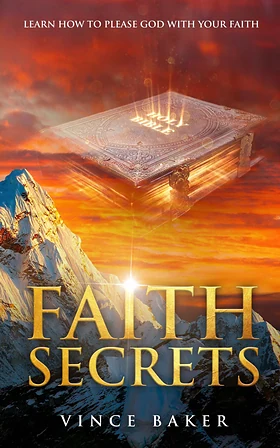
Faith Secrets
Vince Baker explains what Biblical faith is, how to pray the prayer of faith, and why faith is tested. He also explores Jesus’ teaching about speaking to mountains.

Recommended reading
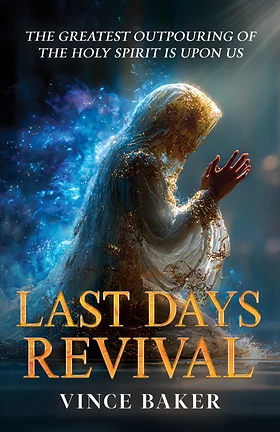
Last Days Revival
Vince Baker presents his Biblical case for a worldwide revival before Christ’s return and explores historical revivals and the Holy Spirit’s work in the Church.
Recommended reading
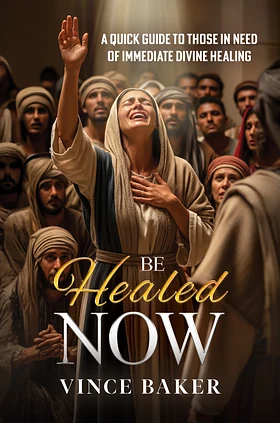
Be Healed Now
This short guide explores Divine healing through prayer, the work of the Holy Spirit, speaking words of faith, and praise.
Live online every Saturday
Bring your Bible on Saturday
In this interactive online Bible Study, Vince explores the words, miracles, and prophecies of Christ, what He accomplished on the cross, and how it all applies to your life. Come ready to grow in faith and have the eyes of your understanding opened.
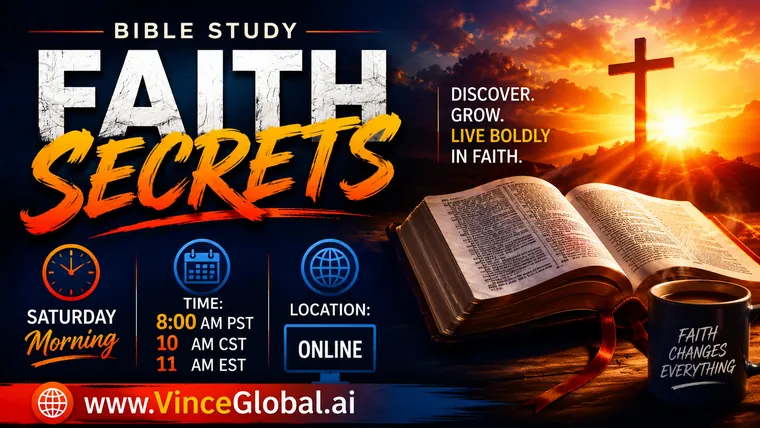
Weekly Start Times
- 8 AMPacific
- 10 AMCentral
- 11 AMEastern
Next Online Bible Study Starts In
Your local start time
Get Saturday Bible Study Reminders
We’ll email you Friday at 5 PM and Saturday at 7:45 AM Pacific. Confirm your email to subscribe.
Open the Bible Study reminder signup form
Unsubscribe anytime.
Quote of the Day
“The faith of Jesus alone could get the job done, but He still required others to have faith.”
Vince Baker Read this quote →
Questions & answers
Frequently asked questions
Where does Church history begin?
It begins with Jesus Christ in first-century Galilee and Judea, His death and resurrection, and the apostles’ Spirit-empowered witness from Jerusalem.
What does the church history timeline cover?
The timeline traces ten eras, from Jesus and the apostles through early martyrs, church councils, medieval Christianity, the Reformations, the Great Awakenings, global missions, Pentecostalism, Divine healing revivals, charismatic renewal, and the worldwide Church through November 2026.
What was the Azusa Street Revival?
William J. Seymour led the Los Angeles meetings beginning in 1906. Prayer, testimonies of spiritual gifts, and a widely circulated newspaper helped spread Pentecostal teaching.
Who shaped church history through faithful witness?
The timeline introduces women and men such as Mary Magdalene, Stephen, Polycarp, Perpetua and Felicity, Jan Hus, William Tyndale, William J. Seymour, Aimee Semple McPherson, and Kathryn Kuhlman. Their stories include testimony, mission, reform, prayer, and martyrdom.
How do I use the interactive church history timeline?
Select an era and open a milestone to read its date, location, and significance. Follow the guide and profile links for Scripture references, sources, and further reading.