Published by Vince Baker Ministries ·
What happens after the first leader is gone?
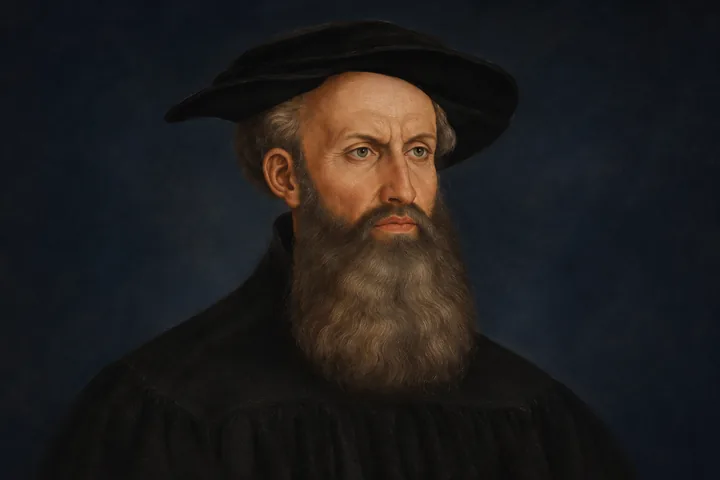
A movement can change direction when a founding leader dies. Zurich faced that moment after Zwingli was killed at Kappel in 1531. Bullinger inherited a congregation and a city dealing with the effects of war and religious division. The Zentralbibliothek Zürich’s timeline sets his appointment in that context. His task included building something stable enough to outlast the immediate crisis.
Bullinger worked through sermons, letters, and statements of belief. In 1549 he and Calvin reached agreement on important aspects of the Lord’s Supper in the Consensus of Zurich. The Second Helvetic Confession, associated with Bullinger and published in 1566, then carried Reformed teaching to readers beyond his own city.
Why does correspondence matter to reform?
Letters let leaders explain a disagreement more carefully than a slogan permits. They can preserve both the subject of a dispute and the fact that people kept talking. Bullinger’s work is a useful reminder that public reform also depends on less visible labor, including teaching, patient writing, and making agreements understandable to others.
How can believers pass on what they have received?
Second Timothy 2:1–2 (KJV) asks Timothy to entrust what he heard to faithful people who can teach others. Ephesians 4:1–6 pairs unity with humility, patience, and love. This week, choose one passage you can study with a younger believer or new reader. Give them time to explain it in their own words, then discuss what they would need to teach it responsibly.
Scripture to read alongside the history
- 2 Timothy 2:1-2 · KJV
- Ephesians 4:1-6 · KJV