Place it in church history
- Era
- Global and Indigenous Awakenings
- Key dates
- Sixteenth through twentieth centuries
- Location
- Asia, Africa, the Americas, and the Pacific
Find Global and Indigenous Awakenings on the interactive timeline.
Published by Vince Baker Ministries ·
How did mission move across cultures?
Francis Xavier reached Japan in 1549, where Christian communities formed and later faced severe persecution. In late sixteenth-century China, Matteo Ricci learned local language and customs and built relationships with scholars. Indigenous Christians sustained and interpreted these communities through periods when foreign missionaries could not remain. That history highlights how much depends on the people who take up the work locally.
Who carried the Gospel in their own communities?
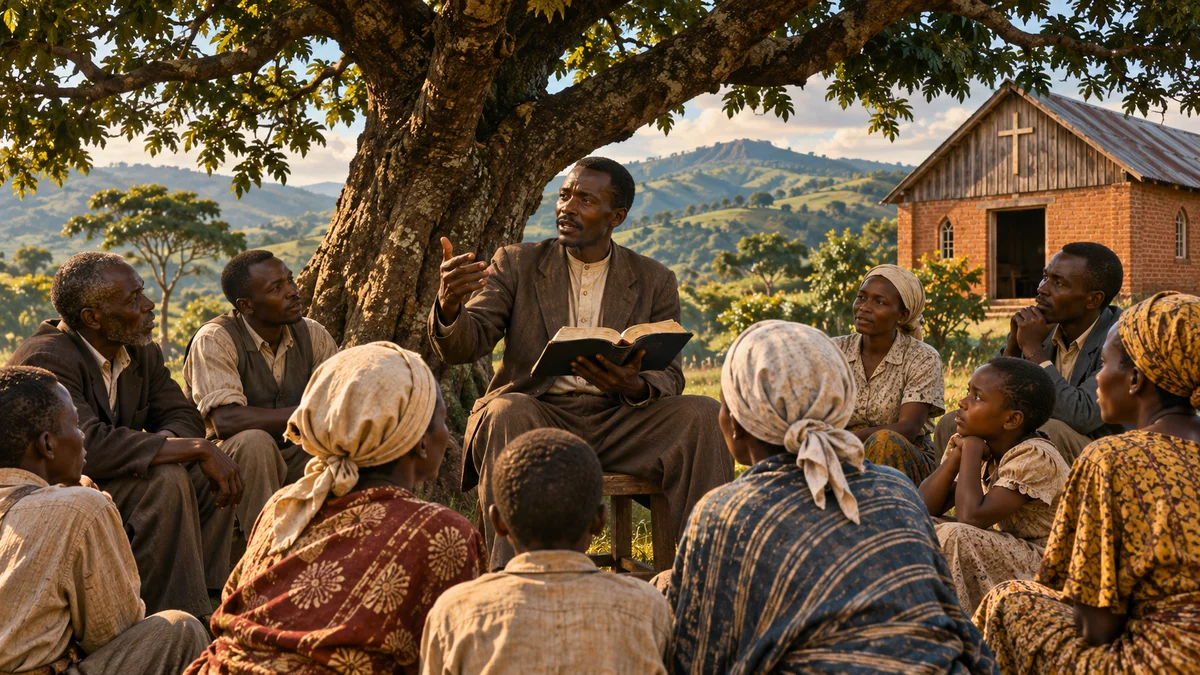
Samuel Ajayi Crowther, a Yoruba Christian and Anglican bishop, advanced translation and church leadership in West Africa. Pandita Ramabai in India linked Christian conviction with education and practical support for vulnerable women and girls. In the Americas and the Pacific, local evangelists, catechists, and translators carried much of the daily work of teaching and forming congregations. The archive often records a visiting missionary’s name more readily than the names of the people who built those communities.
What did Edinburgh and the East African Revival contribute?
The 1910 World Missionary Conference in Edinburgh brought many Protestant mission bodies together to discuss cooperation, with limited representation from the churches where the work took place. In the 1930s, the East African Revival spread through networks of local believers in Rwanda, Uganda, and beyond. Simeon Nsibambi and Joe Church are associated with its beginnings. Small fellowships, confession, restitution, and testimony helped carry the message from one community to another.
What should readers keep in view?
Mission history includes translation, education, and care. It also includes entanglement with colonial rule, cultural pressure, and unequal authority. Reading both local and missionary accounts gives a clearer view of who acted and whose voices were heard. In Acts 8:26–40, Philip begins by listening to a question before explaining Scripture. Consider how that posture changes the way a Christian speaks across cultures.
Scripture to read alongside the history
- Matthew 28:18-20 · KJV
- Acts 8:26-40 · KJV
- 1 John 1:5-9 · KJV