Place it in church history
- Era
- Pre-Reformation and Reformation
- Key dates
- Late 1300s through the 1600s
- Location
- Europe, with consequences across the world
Find Pre-Reformation and Reformation on the interactive timeline.
Published by Vince Baker Ministries ·
What prepared the way for reform?
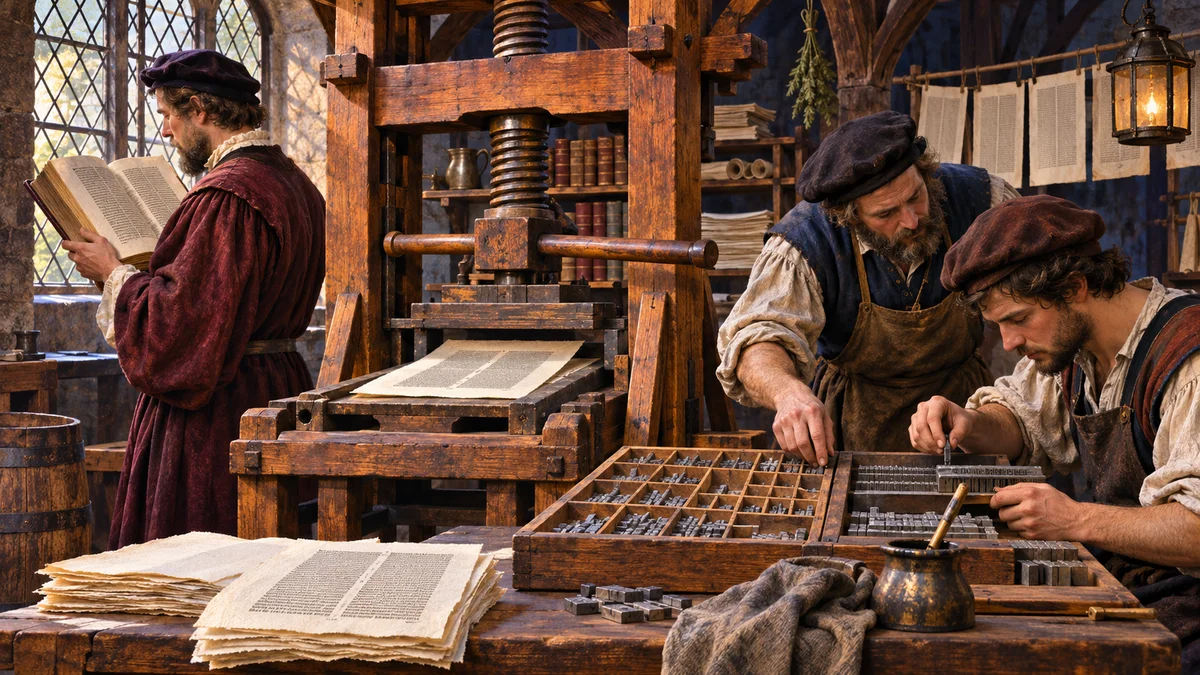
John Wycliffe and his circle are associated with late medieval English Bible translation. Jan Hus preached reform in Bohemia and was executed at Constance in 1415. Both show that questions about preaching, authority, and the Bible in ordinary language long preceded Luther. Printing later made disputes and translations easier to circulate, and widened the reach of people who could read them aloud to others.
Why did Luther’s protest spread?
In 1517 Martin Luther challenged the preaching of indulgences. Debate quickly broadened to justification, authority, and the life of the Church. William Tyndale’s printed English New Testament appeared in 1526. He was executed in 1536, and his translation influenced subsequent English Bibles. His work and death link two enduring themes of this period: access to Scripture and the cost that reform could carry.
Why speak of several Reformations?
Reformed churches developed through leaders such as Huldrych Zwingli, Heinrich Bullinger, John Calvin, and John Knox. Anabaptists argued for believers’ baptism, and many suffered persecution. In England, royal policy and reform movements produced a distinct course. The Council of Trent clarified Catholic doctrine and discipline, while figures including Teresa of Ávila worked for renewal within Catholic religious life. Their different approaches reshaped churches, schools, and public life.
How did women contribute?
Katharina von Bora managed the Luther household, which supported students, visitors, and a demanding ministry. Argula von Grumbach used printed letters to enter public theological debate. The era also produced martyrs on several sides of confessional conflict. Read Acts 17:10–12 and notice what careful examination of Scripture asks of both teachers and hearers.
Scripture to read alongside the history
- Acts 17:10-12 · KJV
- Romans 3:21-28 · KJV
- 2 Timothy 3:14-17 · KJV