
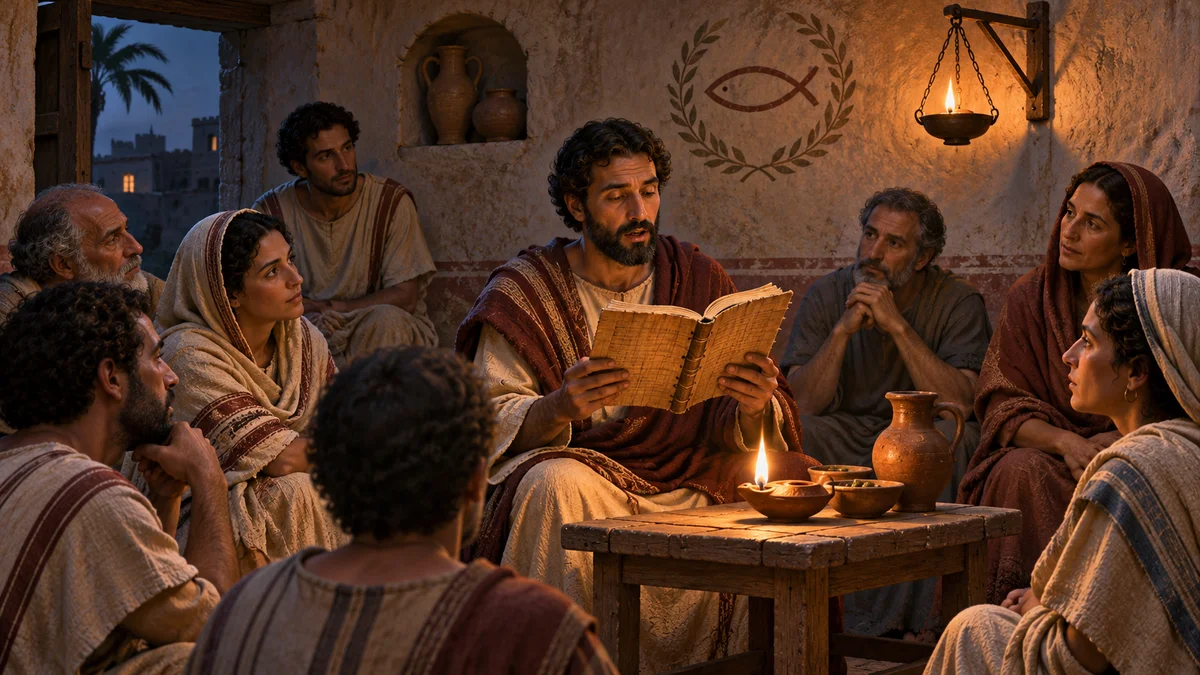
Place it in church history
- Era
- Early Church and Patristic Era
- Key dates
- Second through fifth centuries
- Location
- Mediterranean world, Armenia, and the Kingdom of Aksum
Find Early Church and Patristic Era on the interactive timeline.
Published by Vince Baker Ministries ·
How did Christians respond to persecution?
Persecution varied by place and period. Ignatius of Antioch wrote to churches while traveling toward execution. Polycarp’s church remembered his refusal to renounce Christ in Smyrna. In Carthage around AD 203, Perpetua and Felicity faced death together. Their account includes material presented as Perpetua’s own testimony, framed by an editor. It preserves the voices and courage of women whose witness would otherwise be easy to overlook.
What changed under Constantine?
In 313 Constantine and Licinius agreed on religious toleration, commonly associated with the Edict of Milan. Christian communities could worship more openly and recover confiscated property. The change gave the Church greater public space and brought new questions about the relationship between faith and political authority.
What did the councils decide?
Nicaea in 325 addressed the controversy over the Son’s relationship to the Father. Athanasius became a leading defender of the Nicene confession in the ensuing decades. In 451, Chalcedon confessed one Christ in two natures. Several churches received the definition differently, and the divisions remain relevant to understanding Eastern Orthodox and Oriental Orthodox histories. Meanwhile Christianity also took root beyond the Roman imperial center, including fourth-century Aksum.
What did early teachers contribute?
Augustine’s Confessions traces his conversion and wrestles with desire, memory, and grace. His mother Monica’s persistence in prayer has encouraged generations of readers. Their stories sit beside formal creeds as a reminder that Christian history is also the history of families, habits, and local churches. Read 1 Peter 3:14–17 alongside the martyr accounts and look for the combination of courage and gentleness.
Scripture to read alongside the history
- Revelation 2:8-11 · KJV
- 1 Peter 3:14-17 · KJV
- John 1:1-14 · KJV